Climbing 6,000 m Peak in the Himalayas and Choice of Peaks
Q. Why should I choose Nepal for a 6,000 m peak climbing?
There are many 6,000 m peaks scattered across different regions of the world – China/Tibet, India, Pakistan (Karakoram), South America (Andes), Europe and Russia (Caucasus), and Central Asia (Pamir). So, it is natural to wonder: Why choose Nepal for climbing a 6,000 m peak? Here, we give some key reasons why Nepal is one of the best destinations for a 6,000 m peak climbing experience:
First and foremost, Nepal is home to the world’s highest Himalayan range, where eight of the fourteen 8,000 m peaks are located. The country also has more than 1,300 mountain peaks above 6,000 m. This offers a wide variety of options at different difficulty levels – many of which are ideal for beginner and intermediate climbers.
The Government of Nepal has categorized several 6,000 m peaks as ‘trekking peaks,’ meaning they involve little or no technical climbing. Even peaks that require some technical skills are generally easier than many others around the world, making them excellent training grounds for future high-altitude expeditions. Additionally, Nepal provides a streamlined permit system, world-renowned Sherpa climbing guides with exceptional expertise in safety and high-altitude terrain, and added charm of breathtaking natural beauty and rich cultural diversity throughout the journey – all of which make Nepal’s mountains a premium climbing destination. For all these reasons, Nepal is ideal place to begin your climbing adventure and take next step toward achieving your mountaineering dreams in the majestic Himalayas.
Q. Which 6,000 m peak in the Himalayas is typically selected by climbers to begin their high-altitude mountaineering journey?
Climbers choose any of three – Island Peak, Mera Peak, or Lobuche Peak – for a beginning journey to a Himalayan peak-climbing experience. Each, however, has its own importance and unique characteristics.
Those who prefer a less technical climb, yet looking for gaining higher altitude summit experience, they choose Mera Peak.
For those who wish to combine the Everest Base Camp trek (or other treks) with a peak climb, Island Peak or Lobuche Peak is better choice. Among these two, Island Peak is less technical and less demanding than Lobuche Peak. Therefore, climbers usually select one based on their previous experience and enthusiasm for challenge. If you are a complete beginner, Island Peak is the most recommended option.
Q. I am considering to climb some 6,000 m. peak in Nepal. Is Island Peak a good choice for the first 6,000 m peak to climb?
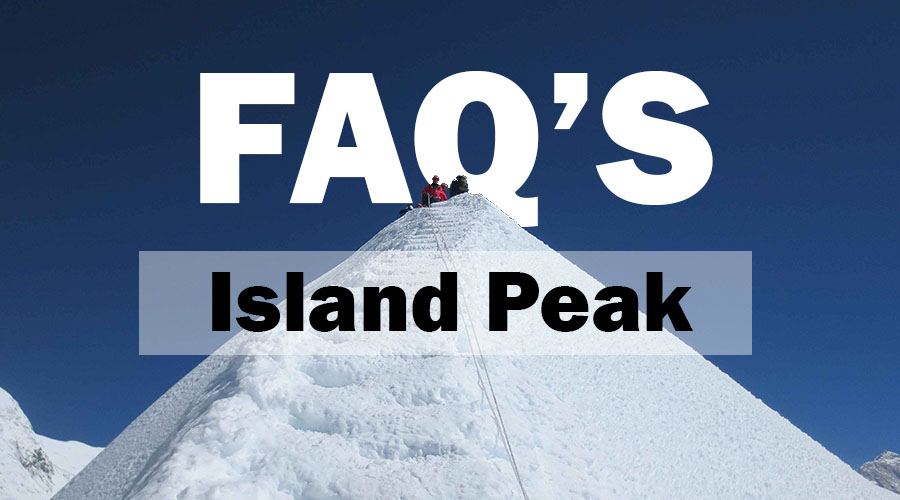
Island Peak (6,189 meters / 20,305 feet) is an ideal mountain for beginners looking to start Himalayan climbing journey. It is one of the most popular guided peaks in Nepal and is considered non-technical by Himalayan standards, meaning it does not require advanced mountaineering skills. The route to Island Peak is well established, with teahouse lodges available until very close to Base Camp, and the climbing can be combined with Everest Base Camp trek or Gokyo-Cho-La Pass Trek. It thus provides rewarding trekking and climbing experience together.
Q. I heard about Lobuche Peak and Mera Peak also. How technical is Island Peak compared to Lobuche Peak?
Lobuche East (6,119 m / 20,075 ft) is slightly lower in altitude than Island Peak, but it is generally considered more technical (moderate technical). Lobuche East involves steeper rock and ice climbing, mixed terrain (rock and snow), and a more demanding summit pyramid, which many climbers find more challenging than Island Peak.
Mera Peak (6,476 m / 21,247 ft) is higher in altitude but less technical than Island Peak. The route to summit mainly follows snow slope of around 30-35°. There is usually a short fixed-rope section near the summit. In contrast, Island Peak features much steeper sections (up to 60-70° in places), including a longer ice headwall that typically requires ascending 100 -150 meters of fixed rope.
Overall, Island Peak is more technical than Mera Peak but less technical than Lobuche East. This makes it a good choice for climbers who want to take a step toward more advanced Himalayan expeditions.
Q. Why do majority climbers choose to climb Island Peak rather than Lobuche or Mera Peak?
As explained above, Island Peak can be easily combined with classic Everest Base Camp (EBC) and other treks like Gokyo Lake, Cho La pass, Three Passes etc. During a single trip, climbers can experience some of the world’s most famous trekking routes while also achieving a Himalayan peak summit.
Lobuche East can also be combined with trekking in the Everest region; however, because it is more technical, it is not as suitable for beginners. And, probably because Island Peak has been climbed many climbers, it is more advertised globally. We also advise novice climbers to complete the Everest Base Camp trek first and then attempt comparatively less-technical Island Peak in order to gain initial Himalayan mountaineering experience to prepare yourself for more technical climbing in future.
Q. Is Island Peak safer than Mera Peak for climbers?
A mountain cannot be labeled as entirely “safe” or “unsafe” on its own. However, in general terms, Mera Peak is considered less risky than Island Peak because it features a gradual snow slope, minimal exposure, and mostly non-technical terrain. In contrast, Island Peak has steeper sections of up to 60-70°, glacier crossings with crevasses, and longer fixed-rope climbs of 100–150 meters, which increase objective risk.
With the support of experienced organizers and professional Sherpa guides, both peaks can be climbed safely. Some issues to be taken into considerations are: proper acclimatization, pre-climbing training and fitness, basic know-how to use some climbing gears, quality equipment, expert Sherpa guide.
About Island Peak climbing, Information and Pre-requisites
Q. Where is Island Peak located?
Island Peak – also known locally as Imja Tse – is located in the Everest (Khumbu) region of Nepal Himalayas. The valley where Island peak lies is called the Imja Valley, situated between Lhotse and Ama Dablam.
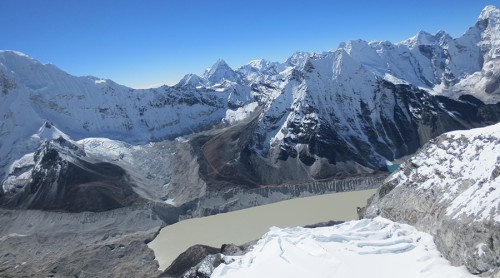
In Sherpa language, ‘Imja’ refers to a pasture area formed by glacial meltwater. Near the peak lies Imja Tsho (Imja Lake), and Imja glacier which feed the valley as Imja Khola (river/stream) flows downward.
From Dingboche, a popular settlement on the Everest Base Camp trek, mountain appears like an island rising out of an ocean of snow and ice—which is how it earned its name from early British explorers and climbers.
Q. What is the altitude of Island Peak Base Camp?
The Base camp of Island peak is set at an altitude of 5,087 m (16,700 ft) – although altitude varies depending upon the site where we pitch camp – which is next to the wall of Imja lake, and at the head of Imja glacier. This camp is used to rest, acclimatize, train to use climbing gears, and prepare for summit push. There is a higher camp at around 5,700 m (18,700 ft), which is less feasible due to logistics and acclimatization. This can be helpful to make the summit day shorter though.
Q. What is the difficulty level of climbing Island Peak?
Some Himalayan peaks around 6,000 m are categorized as trekking peaks by Nepal government. This means they are smaller and generally easier to climb compared to hundreds of 7,000 m and 8,000 m peaks in the country. Island Peak is one of the most popular ‘first Himalayan summit’ peaks. It is considered an easy trekking peak with some technical elements, making it a thrilling climbing experience. The climb, though, involves real mountaineering skills, especially near the summit.
In terms of physical difficulty, this climb can be moderate to challenging, depending on your strength and stamina. The summit day can take 10–14 hours, often in thin air, across rough moraines, steep snow and rock sections, and in cold temperatures. Descents can also be physically demanding.Altitude can be a challenge as well. Even fit trekkers may experience breathlessness, fatigue, and symptoms of AMS (Acute Mountain Sickness).The Nepal Mountaineering Association (NMA) classifies Island Peak as a Group B peak, suitable for beginners with guide assistance. It can also be placed in the Alpine Grading PD+ (Peu Difficile Plus – “a little difficult”) category.
Q. Do I need ice and rock climbing knowledge or experience?
There is no strict prior experience in ice or rock climbing required for Island Peak climbing. Near the summit, you will encounter steep snow and ice sections which can be challenging for you as a novice climber. Our Sherpa guides provide training at Base Camp to help you handle these safely and comfortably. Your physical fitness, endurance, and positive attitude are enough to make climb successful.
We also expect that our client has at least of British hill hiking experience and some knowledge of rock and Ice climbing.
Q. What level of physical fitness is required to climb Island Peak?
As mentioned earlier as well, Island peak is some technical climb in higher altitude which can be done by beginners as well. But, the peak is harsh due to altitude and terrain. So, it requires a good level of physical and mental fitness, and endurance.
You need to have good cardiovascular fitness with a capacity of hiking 6-8 hrs. a day on steep trails with backpack. Summit day is long with 10-14 hrs. walking over rough moraines, rock boulders, snow, and ice. Steep ascent and demanding descents must be done. Your body should adapt well in higher altitude with proper acclimatization.
Q. Can I climb Island Peak if I have prior experience of climbing Kilimanjaro?
Climbing Kilimanjaro (5,895 m / 19,341ft) means you have already been very close to 6,000 m altitude and gained valuable experience with high altitude, long summit day, and demanding downhill descent. This background is extremely helpful for acclimatization and building confidence needed to attempt Island Peak (6,189 m / 20,305 ft), which is slightly higher than Kilimanjaro.
However, Island Peak involves additional technical challenges. You will need to use crampons, a harness, an ice axe, fixed ropes, and a Jumar, navigate glacier crossings, and climb a steep ice headwall – all of which are not required on Kilimanjaro. Conditions on Island Peak, surrounded by some of the world’s highest mountains including Mount Everest, Lhotse, and Makalu, can be much colder, windier, and more exposed. The summit day from Base Camp or High Camp is also usually longer and more physically demanding than on Kilimanjaro.
Q. What mountaineering/climbing experience or training is required for Island Peak climbing? Is a 4,000 m altitude trekking experience sufficient preparation for Island Peak?
We categorize Island Peak as a non-technical peak; however, it is still a serious climb in the Himalayas. Prior mountaineering experience is not strictly required to climb Island Peak, but previous trekking or climbing experience at higher elevations of 4,000–5,000 meters (in the Himalayas or elsewhere) is highly beneficial, as it can make acclimatization easier.
Having some basic mountaineering skills and knowledge of climbing equipment – such as use of crampons, an ice axe, fixed ropes, and ascenders (Jumar), as well as basic descending or rappelling techniques – will also be helpful. Our Sherpa guide, at the Base camp or High camp of Island Peak will conduct a short training session on use of climbing equipment required for your summit bid. In addition, good physical fitness, supported by regular cardio training (running, cycling, hiking), strength training (legs, core, back), and strong mental endurance in extreme conditions, will greatly increase your chances of a successful and safe summit.
Q. What is the best way to prepare for climbing Island Peak and other 6,000 m peaks?
As mentioned above, Island Peak and other 6,000 m peaks are not easy climbs in the Himalayas as the conditions are different here. Many of our clients attempting these climbs are cyclists, runners, and fitness enthusiasts. To prepare your body, it is recommended to follow a 2-3 months training plan before expedition. Focus on cardiovascular exercises such as running, cycling, swimming, and stair climbing. In addition, your legs, core, and upper body should be well-conditioned, as climbing involves ascending and descending steep slopes during summit push. Since you will also need to carry a backpack with water, snacks, and some climbing gears, it is required to practice hiking or training with a loaded backpack to simulate real conditions.
Q. Is this trip (Island peak climbing) suitable for me?
We have already outlined general fitness and other requirements for Island Peak climbing above. Climbing a 6,000 m peak in the Himalayas is relatively manageable for trekkers and hikers who have some experience using an ice axe, walking on fixed ropes, and using crampons on snow and ice terrain. If you are considering climbing Island Peak, ask yourself a few important questions: Am I physically fit enough to withstand high-altitude walking/climbing in the Himalayas? Am I technically capable of handling expected terrain and conditions? The honest answer to your questions can hint whether the peak is suitable for you or not. If you have any doubts, we recommend you to train yourself bit before attempting the peak.
Q. How many days does it take to climb Island Peak?
If you are thinking of just climb days, it is a day task from Base Camp to summit and return to Base camp. If your question is for whole trip days, then it depends upon where you travel before or after the climb. If you want to do only Island Peak climb without Everest Base Camp, then our program is of 18 days. Combined with Everest Base Camp trek will take 21 days. If you are asking only about climbing days, it is a one-day task to go from Base Camp to the summit and return to Base Camp. If your question is about total trip duration, then it depends on where you travel before or after the climb. If you want to do only Island Peak climb (without the Everest Base Camp trek), our program is of 18 days. When combined with the Everest Base Camp trek, it takes 21 days in total.
Q. Why do people include Everest Base Camp and Kala-Patthar before climbing Island Peak?
Island Peak climbing with Everest Base Camp trek is ideal for many reasons. The foremost benefit is better acclimatization, as you reach Everest Base Camp at 5,364 m (17,598 feet) and ascend Kala Patthar at 5,545 m (18,192 feet) before attempting Island Peak summit. This greatly increases your chances of success, reduces the risk of altitude-related illness, and offers incredible Himalayan scenery. Combining these two adventures results in a richer, more complete Himalayan experience and a truly unforgettable journey.
Q. Does age affect ability to climb Island Peak?
Age is not necessarily a limiting factor in terms of success on Island Peak climb. The Government of Nepal does, however, restrict permits for minors under sixteen years of age, but there is no upper age limit. Physical and mental fitness are primary prerequisites. Older climbers, or those with lower physical stamina, may need more time to acclimatize or may require extra days to control their pace. However, there is no alternative on summit day – you must climb hard and complete a long descent.
Choosing the Right Company (Why Satori Adventures)
Q. How to choose an experienced climbing service provider for my Island Peak climbing trip?
For a successful and safe expedition, choosing an experienced service provider is one of the most vital steps. A company with certified and experienced guides, strong safety standards, and well-planned itineraries is essential when selecting your climbing partner. In Nepal, more than 1,700 trekking companies are registered and licensed to offer 6,000-meter peak climbing services, but only about 30 companies operate regular expeditions to these 6,000-meter peaks. You have to thus careful selecting the right one, and we are proud to be one of those 30 companies and assure that you are in right hand.
Q. Why Should I choose Satori Adventures for Island Peak climb trip?
If you are embarking on a journey of the Himalayan peak climbing beginning with Island peak, choosing right company makes all the difference. Satori Adventures for some reasons will be your best partner.
As mentioned above, out of more than 1,700 trekking companies in Nepal registered only 30 companies operate 6,000 m peaks expedition services regularly. We are proud to be one of these 30 companies and have consistently been offering safe, reliable, and professionally guided climbing expeditions.
We are a homegrown expedition operator from Nepal, with all professional climbing guides born and raised in the Himalayas. We do not simply ‘fill’ expedition spaces; instead, we focus on forming a team of compatible climbers who show strong integrity, honesty, and trust in one another. We work on our philosophy of “High Success and High-Safety”. The company and expedition both led by an experienced mountaineers and industry leader. Satori Adventures’ Managing Director has been appointed as a Board Director of Nepal Tourism Board for the term (2024-27), in recognition of his significant contributions to Nepal’s tourism industry. And, he has been elected General Secretary of the Expedition Operators Association Nepal (EOA-Nepal) for the term (2023-27).
We are a reliable expedition operator in the Himalayas, consistently running successful climbing trips to 6,000 m, 7,000 m, and 8,000 m peaks, including Mt. Everest. Our Island Peak expedition is known for high safety standards, an excellent safety record, a high success rate, carefully designed itineraries, high-quality camping, reliable logistics and meals, and small group sizes with personalized service.
Q. What are accommodation options in Island Peak and high camps?
At Base Camp, we pitch high-quality tents and provide high-altitude standard mattresses and sleeping mats for your good sleep and rest. There is only one summit day on Island Peak, so no additional accommodation is required at higher camps. In total, you will spend 2 to 3 nights in tented accommodation. Before and after climb, you will stay in comfortable, cozy teahouse lodges.
Q. What types of meals can I expect during my Island Peak climbing trip?
From Lukla up to Chukung – the place where last tea-house available before Base Camp – we use lodges/guesthouses (aka teahouses) for accommodation and meals. These lodges will provide meals based on their standard Menu, and you can choose your meal from menu. They offer varieties of meal including soup, noodles, rice, pasta, potatoes, eggs and others. At the Base Camp, we have our own kitchen where our expedition cook prepare meal for you. We supply high-altitude food that meets requirements of balanced diet for expedition. In high camp – if required to stay, we use freeze-dried packaged foods. They offer a variety of high-quality flavors and are easy to prepare at altitude.
Q. What personalized services I can expect from the Satori Adventures? Will someone pick me up from airport?
Satori Adventures’ representative will be waiting you at the airport with your placard. Before you meet us, you are required to collect your luggage, clear immigration and customs, and proceed to arrival terminal. Airport and arrival terminal is small in Kathmandu, and you can easily find a person holding a placard with your name. We then transfer you to your pre-booked Hotel, and all other services included as per agreed itinerary.
Q. Is the climbing permit included in Satori Adventures’ Island Peak climbing package cost? Who arranges my climbing permit?
Yes. Climbing permit is included in the package cost and Satori will arrange the permit.
Health Issues, High Altitude Illness (AMS, HAPE, HACE) and Prevention
Q. Is there a risk of high-altitude sickness during Island Peak climb? What other health issues can arise?
At high altitudes, reduced oxygen level affects your cardiovascular and respiratory systems. This can cause breathing difficulties and may lead to Acute Mountain Sickness (AMS), the first stage of altitude illness. Common symptoms include headache, fatigue, nausea, and vomiting. If left untreated or ignored, Acute Mountain Sickness (AMS) can progress to High-Altitude Cerebral Edema (HACE), which is caused by swelling of the brain, or High-Altitude Pulmonary Edema (HAPE), a buildup of fluid in the lungs. Both HACE and HAPE are life-threatening conditions that require immediate medical attention.
During Island Peak climb, AMS can sometimes be an issue, while chances of HACE and HAPE are almost zero and rare – but cannot be ignored. Well planned Island Peak itinerary with trek to Everest Base Camp, and acclimatize well before climb can minimize the risk of AMS. Since there is only one summit day above base camp at higher altitude before descending back to BC, chances of developing HAPE or HACE are pretty low.
Other possible risks during Island Peak climb include sunburn and snow blindness. Intense UV radiation at higher elevations can damage both your skin and eyes. To protect yourself, use sunscreen regularly, wear appropriate protective clothing, and shield your eyes with Category 4 sunglasses – especially when traveling over glaciated terrain.
In addition to these issues, you may experience a loss of appetite at high altitude, and sometimes stomach cramps or bloating. As altitude increases, digestion tends to slow down, and bowel movements may become less frequent.
Q. Can you explain more about Altitude Mountain Sickness (AMS), so I know what to pay attention to?
AMS occurs when body reacts to a reduced amount of oxygen in the bloodstream at high altitude. It normally develops above 3,000 meters (9,800 feet) above sea level, although susceptibility varies from person to person. There is no reliable way to predict who will be affected, and previous high-altitude experience does not guarantee immunity. However, people with better cardiovascular fitness may be less vulnerable to AMS. As altitude increases, oxygen density in the atmosphere decreases, meaning body receives less oxygen with each breath. This results in lower oxygen pressure in blood and tissues, making it more difficult for body to function normally.
The symptoms of AMS are usually mild and often improve with rest, proper hydration, or by descending around 400 meters. If ignored, however, AMS can progress into serious, life-threatening conditions. Symptoms can appear within 1-2 hours of ascent, but more commonly develop 6 -10 hours after climbing. Mild symptoms typically subside within 1-2 days as body acclimatizes, although they may return as altitude increases further.
Common AMS Symptoms:
- Headache
- Shortness of breath
- Loss of appetite
- Fatigue
- Nausea or dizziness
- Rapid pulse
- Disturbed sleep or drowsiness
- Irritability
- Swelling of hands, feet, or face
- Vomiting
Severe AMS Symptoms:
- Bluish discoloration of skin (cyanosis)
- Chest tightness or congestion
- Confusion
- Cough (sometimes with blood)
- Decreased consciousness or withdrawal from social interaction
- Grey or pale complexion
- Inability to walk in a straight line, or inability to walk at all
- Shortness of breath at rest
Q. How can I prevent AMS, if possible? And, any treatment available?
Certain medical conditions, such as respiratory illnesses, and some medications, including sleeping pills, can increase the risk of altitude sickness. It is important to inform us or your guide in advance about any medical conditions or medications before ascending to higher altitudes. You can help your body acclimatize and reduce the risk of altitude sickness by:
- Avoiding alcohol, tobacco, and other similar stuffs that can interfere smooth flow of oxygen to the body and brain
- Eating small, frequent meals that are high in carbohydrates
- Drinking plenty of water. A good test of proper hydration is the ability to produce clear and colorless urine
- Take it easy and have a rest. Nap when you can. Walk at a slower pace than you would at sea level and avoid over-exertion
- Climb gradually and take one to two rest days for every 600m of ascent above 3,000 m.
- Sleep at a lower altitude when possible
- Learn how to recognize early symptoms of mountain sickness
Basic treatment:
By following the guidelines outlined above, most climbers acclimatize successfully. The most effective way to manage AMS is to descend to a lower altitude, adjust your ascent pace, eat well, rest, and stay properly hydrated. Early recognition of AMS is critical, as it is much easier to treat in its initial stages. Our Sherpa guides are trained to recognize, prevent, and respond to AMS symptoms. They will monitor you closely, but it is your responsibility to report any changes or symptoms honestly and promptly.
If needed, your guide may recommend an extra rest day, a descent to a lower altitude, or the use of medications such as ibuprofen, paracetamol, or specific AMS medications. Acetazolamide (Diamox) is commonly used to improve breathing and alleviate mild symptoms. While taking it, you should drink plenty of fluids and avoid alcohol. In severe cases of AMS, your guide will coordinate with our Kathmandu office to arrange helicopter evacuation. Before joining the trek, you are required to purchase or submit proof of comprehensive travel insurance, which must include coverage for helicopter rescue and hospitalization.
Q. What types of personal medical kit should I carry for altitude sickness at Island Peak?
You may consult your doctor before you begin the trip and get required special medications for your use. You can have medications for altitude sickness, pain and fever, digestive problems, cold and respiratory problems, and other basic first aid items such as Bandages, antiseptic cream, blister pads, and tape etcetera. We will have those basic medications with us at Base Camp and with your Sherpa guide as well. We will have oxygen cylinder at the Base Camp of Island Peak if needed, and oximeter to check your pulse and oxygen level regularly.
You should consult your doctor before beginning the trip and obtain any special medications you may need. It is recommended to carry medications for altitude sickness, pain and fever, digestive issues, cold and respiratory problems, as well as basic first aid items such as bandages, antiseptic cream, blister pads, and tape. Your Sherpa guide also carry basic medications and first aid materials. Additionally, an oxygen cylinder will be available at Island Peak Base Camp, along with a pulse oximeter to monitor your oxygen levels and pulse regularly.
Q. Can people with medical conditions climb Island Peak?
Island Peak is a physically demanding high-altitude climb, so climbers with certain medical conditions need to be cautious. If you have chronic heart or lung conditions, severe asthma, high blood pressure, or a previous history of altitude sickness, you should consult your doctor and obtain medical clearance before attempting the climb. You may prepare for physical fitness well, have more days to acclimatize, and the most important of all, inform us of your medical conditions honestly in advance.
Q. Can people with high blood pressure or diabetes climb Island Peak?
Yes, people with high blood pressure or diabetes can climb Island Peak, but extra precautions must be taken. You should consult your doctor and obtain medical clearance before climb, ensuring that your condition is well-controlled. Most importantly, you must disclose your condition honestly to us before booking the trip.
Q. How safe is it to climb Island Peak? What are risks involved in climbing Island Peak?
The Island Peak climb is a relatively small and easy undertaking among the Everest region climbing. With assistance of expert guides and proper logistical management, it is a fairly safe climb. However, inadequate acclimatization, ignoring rules of nature and mountains, poor physical or mental fitness, and inexperience at high altitude can increase risks. Key risks on the Island Peak climb include acute mountain sickness (AMS), which in rare cases may progress to HAPE or HACE, physical strain leading to extreme fatigue or injuries, weather hazards, sunburn, and digestive issues among others.
Proper acclimatization, appropriate physical training, guidance from experienced and trained guides, quality climbing gear, and awareness of weather conditions can significantly enhance safety during the climb.
Best Time to climb Island Peak and Duration of the climb
Q. What is the best climbing season for Island peak in 2026, and why?
Spring (April-May) is considered the best season for climbing Himalayan peaks. By these months, fierce winter winds ease, monsoon rains are still away, and compressed winter snow creates a more solid and reliable climbing surface. Longer sunny days’ and warmer temperatures lessen the danger of frostbite, and cold. Clearer visibility, lighter snowfall, and increased stability in the snow-surface make this season ideal for a safer and more successful ascent.
Autumn (September-October) is equally viable climbing season for mountain peaks of 6,000 m. Temperatures are a bit colder. But, other conditions for lower mountain peaks remains comfortable. Logistics and management within these seasons are exceptional than other seasons.
Q. Can people climb Island Peak in the summer or winter seasons?
Climbing Island peak in summer or winter is not a problem, as the government allows expeditions during these seasons and permit fees are also lower than in two prime seasons. However, access to the peak in the summer rainy months can be challenging because of monsoon rains, while winter months can be extremely cold in the mountains. Despite these challenges, climbing the peak is still possible.
Q. What weather should I expect during my climbing?
Our expeditions are scheduled during spring and autumn. Spring (April-May) is the best season to climb the Himalayan peaks. In spring brutal winter winds begin to ease, the monsoon has not yet arrived, and winter snow has compacted into firm and hard ice – making the route more stable. Sunny days help surface snow to melt and consolidate, while slightly warmer daytime temperatures reduce the risk of severe frostbite and other complexities. Autumn (September-October) is equally viable alternative for climbers, but you can expect colder conditions and a higher chance of harsh weather than in spring. Seasons outside spring generally offer fewer reliable weather windows and require extra caution for the climb.
Sherpa Guides for Island Peak climb, and Climbing Support
Q. Why do I need a climbing Sherpa guide to climb Island Peak?
Island Peak (6,189 meters / 20,305 feet) is not that easy climb too. A personal Sherpa climbing guide can be invaluable in many ways. Your Sherpa guide provides the most important aspects of climbing: safety in the mountains and technical support. Our Sherpa guides are highly trained and experienced, able to navigate the safest and most suitable routes to the summit, can understand the mountain weather and nature properly, manage logistics efficiently, and offer skilled technical assistance during final summit push. For a safe, successful, and unforgettable Island Peak climbing experience, having a personal Sherpa guide is essential.
Q. Can I climb Island Peak without a Sherpa guide or agency?
As per the Government of Nepal guidelines, you must arrange your Island Peak climbing trip through a government registered trekking or climbing company in Nepal, and a guided climb is required. This is essential for your safety, a successful summit, and an overall enhanced Himalayan climbing experience.
Q. Who will be the team leader, Sherpa guide and his experience?
Sherpa guide who will lead your climb to Island Peak is highly experienced, well-qualified, and have been working with us for decades. Most were born in high-altitude regions of the Himalayas and have spent their lives above 4,000 meters, which gives them unparalleled altitude adaptation and mountain knowledge. Our high-altitude climbing Sherpa guides have achieved many 6,000 m, 7,000 m, and 8,000 m Himalayan peaks and have excellent safety records. They possess deep knowledge of weather patterns, route of the summit, and rescue procedures, along with strong leadership and communication skills. They are well-known in the mountain community for their excellent coordination with other expedition companies and are highly respected figures in mountain tourism. Their professionalism, patience, and respect toward every climber make them among the most trusted leaders on the mountain.
Your Sherpa guide who assist you to climb the peak are certified mountain guides through the Nepal Mountaineering Association (NMA) and the Nepal Government, with advanced mountaineering training from NMA and other related trainings from Trekking Agencies Association of Nepal (TAAN) and Nepal Academy of Tourism and Hotel Management (NATHM). Every Sherpa leader and guide holds a valid Nepal Government license, Mountaineering Association accreditation, and official summit certificates. In addition, we provide extensive training to our Sherpa guides in technical mountaineering, English communication, customer service, and Wilderness First Aid, ensuring they are fully prepared to offer the highest level of safety and support on your Island Peak expedition.
You can find detailed profiles and accomplishments of our Sherpa guides here: [Link to Sherpa staff page].
Q. What happens if myself, or a team member, or even our Sherpa guide gets sick while climbing Island Peak?
We wish that such a situation will not occur during your expedition. However, if you get sick during your acclimatization hike, or while at Base Camp then you can opt for recovery in a suitable place (can be 400 m down if altitude sickness). Given the time available and your recovery, you can continue to climb the peak. Your climbing schedule will not be affected by the illness or inability of other team members. You are free to continue your guided ascent of Island Peak as per your plan.
In the rare event that a Sherpa guide becomes ill or is unable to lead you at any point during the trip, we will immediately replace him/them with another qualified Sherpa guide(s) from our team or the region. We maintain a pool of highly experienced backup Sherpa who are ready to step in whenever needed.
Insurance Requirements, Emergency Situations and Evacuation Scenarios
Q. Do I need travel insurance for Island Peak climbing? And, what sorts of insurance coverage is required?
Yes, you need to have proper travel insurance with high-altitude medical coverage for altitude related illness such as Acute Mountain Sickness (AMS), High-Altitude Pulmonary Edema (HAPE), High-Altitude Cerebral Edema (HACE), and other possible medical issues and injuries like frostbite, fall etc. The policy must cover altitude of maximum of 6,500 m. Emergency evacuation, including helicopter rescue, must also be incorporated in your insurance policy. We generally advise a minimum coverage of USD 25,000 for evacuation and rescue services.
Furthermore, your insurance should also include repatriation to your home country if required (this is not mandatory and entirely up to your preference). Besides these, your policy may cover costs of loss, delays, cancellation of services etcetera. Bear in mind that, your small investment in insurance can save you from very high costs in the future.
Q. Where can I obtain my travel insurance? Do you have any recommendations?
It is important to arrange your travel insurance in your home country before departure. When purchasing a policy, ensure that it provides reliable services on timely manner, including emergency evacuation via fully equipped medical transportation. Some insurance companies may not have efficient communication channels in Nepal or in high-altitude regions, which can delay response times in emergency situations. So check their support system and local agency presence.
Additionally, note that classification of emergency situations may vary between insurance companies. So, make sure that you are well-informed of their policies. Though, endorsing any specific company is not our policy, to the best of our previous experience and knowledge, Global Rescue is considered a reliable option.
Q. Are helicopter rescue and evacuation services available during my climbing trip if required? How will it be arranged?
Safety is always our top priority. We plan our itinerary with proper acclimatization schedule, provide good service and care, and quality logistical support during the hiking. So, there is the least chance that you need evacuation. Still, you are in the world’s toughest terrain, and it can be required any time. In the unlikely event of an emergency, helicopter rescue is available at the Island Peak Base Camp. In the Himalayas, high-range helicopters, such as the B3E, have the power to hover above 8,000 meters and perform long-line rescues are in use. This ensures that even in critical situations, rapid evacuation is possible.
At Satori Adventures, we always recommend that our customers have comprehensive insurance that covers medical treatment, evacuation, and high-altitude rescue during the expedition. We will coordinate with the relevant authorities to ensure timely rescue and evacuation if needed.
Gear for Island Peak climb and Equipment list
Q. What kind of gear is required for Island Peak climb? What personal equipment should I bring or have?
We put list of detailed expedition equipment on a separate page [Please click here – link to equipment page]. If you still have questions after reviewing the list, please feel free to contact us at [info@satoriadventuresnepal.com/ or via Link to Whatsapp]
We recommend you have high quality down jackets, fleece layers, and Gore-Tex from reputable brands such as the North Face, Ozark, Marmot or others you trust. We recommend that you use sport millet or La-sportiva high-altitude climbing boots. You will need technical climbing gears such as Climbing Helmet, Ice-axe, Crampons, Alpine-style Harness (e.g. Black Diamond Alpine Bod), Ascender (Jumar), Rappel (descender device) etc. Your personal gear is one of the major factors for a successful summit. Make sure to invest in high quality first hand equipment.
Q. Do I need a personal sleeping bag and tent? What are requirements of sleeping bag for Island peak climbing?
From our experience, you should have a sleeping bag rated for -20°C to -35°C. Using an additional liner will provide extra warmth and comfort. Satori Adventures can provide a high-quality sleeping bag during the trek and climb, but we recommend bringing your own for personal comfort and hygiene. You do not need to worry about tents. Our Base Camp or High Camp tents are already set up before you arrive.
Q. Do you provide sleeping matt for Base Camp?
Satori Adventures will provide a thick quality pad for use in base camp. If you have your own sleeping pad - foam pads generally work best, but some clients prefer air mattresses – it will be comfortable for you.
Q. Do I need specialized high-altitude boots for the Island Peak climbing?
Yes, we strongly recommend using high quality, high-altitude mountaineering boots. The summit day involves snow, ice, and cold temperatures, especially in the early morning. A double-layer mountaineering boot (such as La Sportiva G2, Scarpa Phantom 6000, Mammut Nordwand 6000 or similar) provides better insulation in freezing temperatures, excellent crampon compatibility, and good ankle support – which ease your climb. Some climbers may attempt the climb with stiff B2 boots, but for safety, comfort, and a higher chance of success, proper double boots are recommended.
Q. Which climbing boots should I use for Island Peak? Do I need double-layered boots?
As mentioned above, you use double-layered proper boots that has double boot system, good insulation, fitting (room for thick socks) etc. You can purchase good 6000 m climbing boots.
Q. What clothing layers are needed for Island Peak?
The weather conditions in the Nepal Himalayas can be extremely harsh. When climbing Island Peak, you need to wear a comprehensive layering system to stay warm, dry, and comfortable. It is important for the successful and safe climb as well. Your clothing should include: moisture-wicking base layers (merino/synthetic/thermal tops and bottom), insulating mid-layers (fleece/light down, pant), and protective outer layers for weather protection (water/wind proof Shell jacket or Gore-Tex and pants). Moreover, for summit day you need high-altitude heavy-weight down jacket, and synthetic insulated trousers.
For the summit day, you will also need a high-altitude heavy down jacket and synthetic insulated trousers. Additional essential items include a warm hat or beanie, inner and outer gloves, thick mountaineering socks, and other necessary cold-weather clothing.
Q. What is the approximate cost of purchasing climbing gear for Island Peak climbing in 2026? Can I rent some of the climbing equipment in Nepal?
The cost of equipment can vary depending on the quality and brand. If you are starting your climbing journey and plan to climb more peaks in the future, it is the best to invest in high-quality climbing equipment that can be used repeatedly. For Island Peak climbing, you may need approximately USD 2,000 - 3,000 for your personal equipment if buying all items new. While many pieces of gear can be rented in Nepal, it is advisable to have your own equipment for items related to hygiene and personal comfort, as rented gear may sometimes be the wrong size or uncomfortable during the climb.
For these reasons, we strongly recommend making a careful and informed decision regarding your personal expedition equipment, prioritizing quality, proper fit, and reliability to ensure a safe and successful climb.
Q. Who will carry climbing equipment above base camp? Do I have to carry my own gear?
With full board service, porters will assist in carrying your gear to Base Camp. We provide required number of Sherpa guide and staff to pitch your tent, ferry logistics, and prepare meal and serve you. You are responsible to carry your personal extra gear, dry food, and others during the summit push by yourself. Thus, requiring good physical fitness.
Q. Will we have any means of communication during trekking and climbing?
There is mobile coverage from N-cell and NTC prepaid networks along the trekking route up to Dingboche. You can purchase data packs for these carriers in Kathmandu before starting your climbing trip. Wi-Fi services are also available in many lodges along the way. If you want to stay connected even in more remote areas of mountains – at the Base Camp or higher in the mountain, you can rent a satellite phone, although this can be quite expensive.
Cost of Island Peak Climbing for 2026, Bookings, and Refund/Cancellation
Q. What is included in the expedition cost, and how much additional money should I budget for personal and unforeseen expenses?
Under the Costs section [link to the costs page], you can find full details of what is included and excluded. If you have further questions, please contact us at info@satoriadventuresnepal.com or send a WhatsApp message [give number]. There are other personal expenses to consider during your trekking and climbing. Tips for Sherpa guides and support staff are an important part of these extra costs. Based on our experience, you may budget around USD 2,000 -3,000 for personal and unforeseen expenses. This includes:
- Tips and summit bonuses for Sherpa and other staff
- Internet and communication
- Personal food, snacks, and beverages
- Emergency and contingency fund (recommended USD 1,000)
Planning ahead for these expenses helps ensure a safe, comfortable, and well-prepared Island Peak expedition.
Q. How do I book my Island Peak climbing trip for 2026 or 2027?
Once you complete the booking page with related information, you are requested to send us scanned copy of passport and printable JPEG format photo for permits. You may provide us your travel itinerary once it is confirmed. 30% deposit will be required at the time of booking, and rest prior to your trip commencement date. For, more information on booking, payments, and cancellation policies including other conditions, visit our terms and conditions page [Link to terms and conditions page].
Q. What happens if I cannot continue the expedition, is any refund possible?
There are different refund policies of Satori Adventures depending on different conditions. Please read our Terms and Conditions [Link to Terms and Conditions page] for detailed refund policy.
Visa, Climbing Permits, Summit Certificate, and Documentation
Q. Do climbers need a visa to enter Nepal?
All foreign visitors, except Indian nationals, are required to obtain a Nepal visa. These visas are generally easy to obtain upon arrival at Tribhuvan International Airport or other port of entry. Nationals from some African countries, as well as Afghanistan and Pakistan, may face additional time for processing.
Since spring 2015, Nepal Immigration has introduced a computerized automated visa system, making the arrival process faster and more convenient. You can fill up online form, and visit Nepal embassy in your home country, along with two passport sized photographs to get the visa – if there are any and close to your home. Alternately, you can bring the form and get visa at the immigration upon arrival in Kathmandu. You may get 30 days Nepal entry visa for the climbing trip. For detailed information on immigration rules, items you can bring, and other travel regulations, please visit the official Nepal immigration website: https://www.immigration.gov.np/en.
Q. Do I need a climbing permit to climb Island Peak? Where and how can I obtain the Island Peak climbing permit?
Yes, a climbing permit is required to climb Island Peak. The Nepal Mountaineering Association (NMA) is responsible for issuing the permit on behalf of the Government of Nepal, and Satori Adventures will arrange your climbing permit for you. Along with the Island Peak climbing permit, you also need the Sagarmatha National Park entry permitand the Khumbu-Pasang Lhamu Rural Municipality permit.
Q. What documents are required to obtain the climbing permit?
Nepal Mountaineering Association (NMA) requires:
- A clear copy of your passport (photo page)
- Two recent passport-sized photographs
- A confirmed climbing itinerary prepared by Satori Adventures
- Application form submitted through Satori Adventures to the Nepal Mountaineering Association (NMA)
We take care of all your climbing permits. So, you only need to send us your passport copy and passport-sized photographs when you book your Island peak climb.
Q. Can I obtain the Island Peak climbing permit individually?
If you are asking whether you need a climbing partner to obtain the permit, the answer is no – you do not need a climbing partner to get an Island Peak climbing permit. You can plan individually and climb the peak by getting assistance from climbing/trekking company. However, if you are asking whether you can obtain the permit by yourself, then the answer is also no. You cannot obtain the Island Peak climbing permit individually. The Nepal Mountaineering Association (NMA) only accepts applications through a government-registered trekking or climbing agency in Nepal like us – Satori Adventures.
Q. How long does it usually take to process and obtain the Island Peak climbing permit?
Once all required documents are prepared and submitted, the Nepal Mountaineering Association (NMA) issues the permit within 1-2 working days. To avoid any disappointments and time pressure, we prepare well everything well in advance.
Q. What is the cost of the Island Peak climbing permit? How much is the total estimated permit cost for Island Peak if there are other permits required?
There are different permit fees for Island Peak depending on the climbing season. The prime climbing season – spring (March to May) costs USD 300 (or 250) per person; whereas other seasons cost USD 175 or USD 125 (autumn) or USD 70 (summer and winter). In addition to the climbing permit, the Khumbu–Pasang Lhamu Rural Municipality, where the peak is located, charges an entry fee of Nepalese Rupees (NPR) 3,000 per person, and the Sagarmatha National Park charges another NPR 3,000 per person.
Q. Will I get a summit certificate after climb?
Yes, you will get a summit certificate after successful climb from Nepal Mountaineering Association.
Q. What documents are required to issue the summit certificate?
The group leader of the expedition team should fill out a report form, and submit the summit photo, along with the recorded summit date and time. We, as the operator, will handle all documentation and submit it to the NMA on your behalf.